
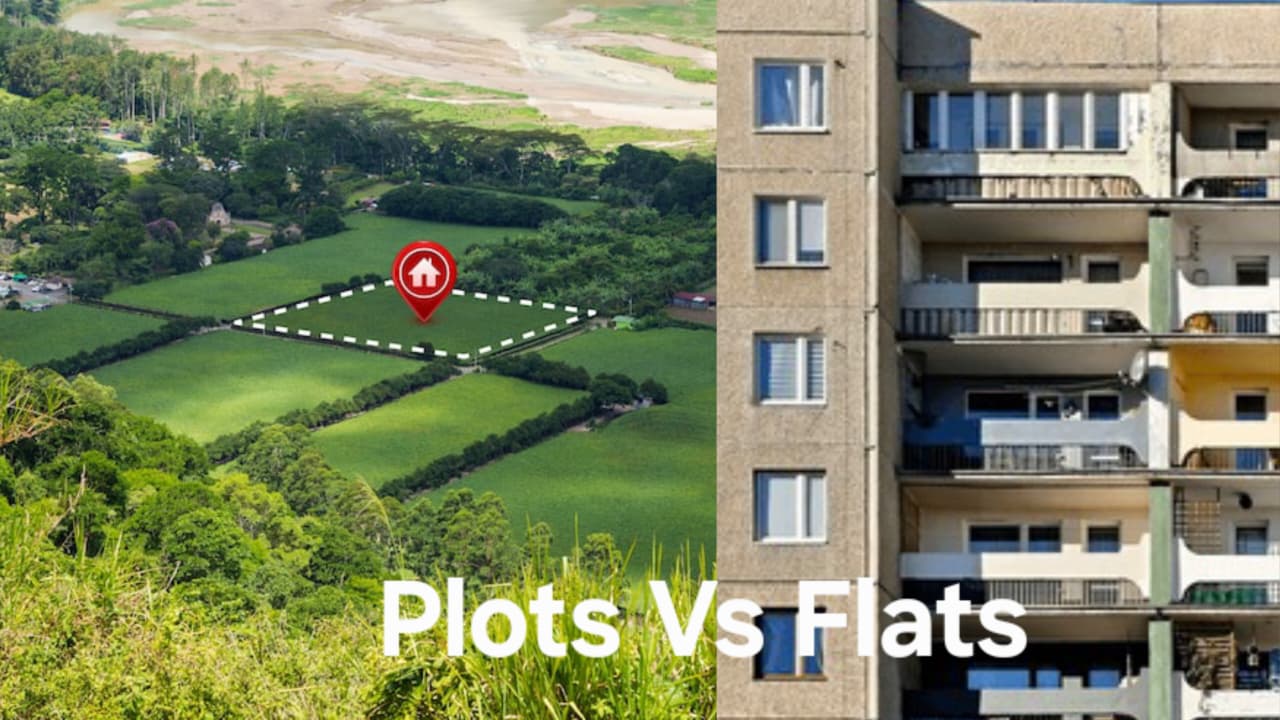
Plot vs Flat: The Difference
In today’s real estate market, choosing the right investment property is not just about budget; it is about long-term returns, flexibility, and risk. Buyers are often confused between plots and flats because both serve different purposes. A flat offers ready possession and rental income, while a plot provides ownership of land with greater control and long-term appreciation potential.
Let’s understand what a flat is and what a plot is in detail.
A Plot: A plot is a specific piece of land where you can build a home, bungalow, or any approved structure. However, construction must follow local development rules and regulations. Plots are often considered a long-term investment property because land value generally increases over time, especially in developing areas with growing infrastructure.
A Flat: A flat is a residential unit that is part of a larger building or apartment complex. When you buy a flat, you own a specific unit along with shared rights to common areas such as lifts, corridors, parking spaces, and amenities like gardens or clubhouses. However, flats offer limited flexibility, as the structure, layout, and external design cannot be changed by the owner. Over time, flats may also involve maintenance costs and structural depreciation, which can affect their long-term value as an investment property.
1. Ownership Structure in Plot vs Flat
A plot gives you ownership of land only. You own the ground and have full control over what you build on it, subject to local regulations.
A flat, on the other hand, gives you ownership of a unit inside a building along with shared ownership of common areas like lifts, corridors, and amenities.
2. Flexibility in Construction in Plot vs Flat
With a plot, you have complete freedom to design and construct your house as per your needs and budget. You can also build in phases or renovate later.
But with a flat, construction is fixed. You cannot change the structure or layout beyond basic interior modifications.
3. Investment Growth in Plot vs Flat

Plots generally offer higher long-term appreciation because land is limited and demand increases with development. Thus, it stands as a good option for investment property.
Flats may appreciate, but their value often slows down over time due to building age, maintenance, and depreciation of the structure.
4. Maintenance Cost in Plot vs Flat
Plots usually have very low maintenance costs since there is no built structure involved until you construct, which makes them a more cost-efficient option for a long-term investment property.
Flats come with regular maintenance charges for security, lifts, cleaning, and society amenities, which continue monthly or yearly.
5. Rental Income in Plot vs Flat
Flats can generate immediate rental income once purchased, making them suitable for short-term cash flow. So, flats can be considered as the best property investment only if you want to make immediate income.
Plots do not generate rental income unless developed into a house or commercial space. But if seen on a long-term basis, plots serve as the best property investment.
6. Liquidity and Resale in Plot vs Flat
Flats are easier to sell in established markets where demand for ready homes is high. Such as in metro cities, but it can also lose value if the area is not good enough, which makes it a bad commercial property investment.
Plots may take longer to sell, but in high-growth areas, they often provide better resale value and profit margins.
7. Risk Factor in Plot vs Flat
Flats often carry risks like building depreciation, society issues, and maintenance dependency.
Plots carry risks mainly related to legal approvals and location selection, but once verified, they are generally more stable and act as the best investment property.
8. Long-Term Wealth Creation with Plots vs Flat
When seen as a long-term property investment, plots are often preferred by long-term investors because land value tends to increase with infrastructure development.
Flats are more suitable for users who prioritize immediate living or rental returns rather than long-term capital growth.
9. Legal Complexities in Buying a Plot vs a Flat
A plot involves deeper legal verification such as land ownership history, NA (Non-Agricultural) conversion, encumbrance checks, and layout approvals. Any missing document can lead to legal disputes or construction issues in the future.
Buying a flat is comparatively more structured due to regulatory frameworks like RERA and standardized builder agreements. However, it still requires checks such as RERA registration, occupancy certificate, and builder credibility. In both cases, due diligence is essential before investing in any investment property.
10. Property Tax Differences: Plot vs Flat in India
Property tax for plots is generally lower because it is based mainly on land value and local municipal rules. Since there is no constructed structure, the annual tax burden remains minimal until development begins.
Flats usually attract higher property tax because they include built-up area, municipal services, and society-related charges. Additionally, owners also pay monthly maintenance fees, which increase the overall cost of holding the property compared to plots.
11. Investment Returns: Residential Plot vs Flats in Metro Cities
In major metropolitan cities, residential plots have shown stronger long-term appreciation due to limited land availability and increasing infrastructure development. As cities expand outward, land values in developing zones tend to grow faster over time.
Flats, while offering rental income and immediate usability, often experience slower appreciation due to building ageing and supply saturation in certain areas. This is why many investors consider plots as a more growth-oriented investment property, especially for long-term wealth creation in high-growth corridors.
Conclusion
Both plots and flats have their own pros and cons, and the right choice depends on your financial goals. Flats are suitable for those looking for immediate possession and rental income, while residential plots are better for long-term wealth creation and capital appreciation. Plots In Nagpur city, especially on Wardha Road, the demand for plotted developments is increasing. Projects like Nidhivan offer RERA-approved, well-planned plots in Nagpur city, which are the best investment property options with future growth potential. Ultimately, your decision should depend on whether you want short-term returns or long-term value for the best plots; consult with real estate companies in Nagpur.